What to Consider When Switching From a Traditional Office to a Managed Workspace
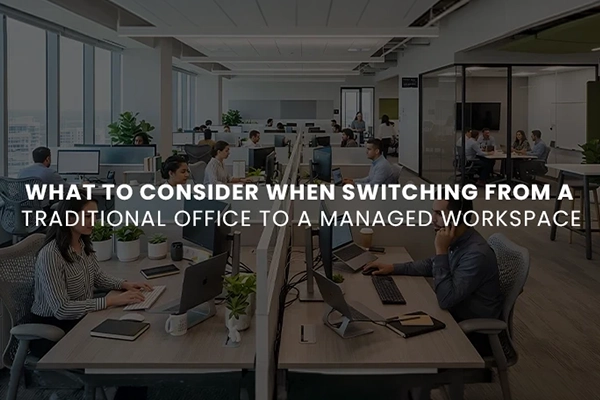
Below are the things to consider when switching from a traditional to managed workspace:
Evaluate the Overall Cost
Cost is a major consideration when comparing traditional offices with managed workspaces. Conventional offices often require substantial initial investment in interiors, furniture, equipment, and technology. Businesses must also pay recurring expenses for electricity, internet, cleaning, repairs, and security. Managed workspaces typically offer furnished offices and shared facilities for a recurring fee, making budgeting simpler. However, companies should examine the complete pricing structure rather than comparing rental costs alone.
- Compare monthly rent and service charges.
- Check deposits, setup fees, and additional expenses.
- Confirm whether utilities, internet, and maintenance are included.
- Calculate the total occupancy cost per employee.
- Review charges for parking, meeting rooms, and extra services.
Choose the Right Location
Office location affects employee commuting, client accessibility, and professional visibility. A conveniently located workspace can improve employee satisfaction and make business meetings easier. Before selecting a location, businesses should assess transportation options, surrounding facilities, and accessibility for employees and visitors.
- Check proximity to public transportation and major roads.
- Evaluate parking availability and commuting convenience.
- Look for nearby restaurants, banks, and essential services.
- Consider accessibility for people with disabilities.
- Choose a location suitable for clients and business partners.
Consider Flexibility and Scalability
Business requirements frequently change as teams expand, projects evolve, or working arrangements become more flexible. Traditional office leases may involve lengthy commitments and expensive modifications. Managed workspaces often provide different office sizes, private cabins, and adjustable seating arrangements. This flexibility can benefit startups, growing businesses, and companies establishing operations in unfamiliar markets. Nevertheless, organizations should understand the contractual conditions before making a commitment.
- Review contract duration and renewal conditions.
- Understand notice periods and termination penalties.
- Confirm whether additional seats can be arranged quickly.
- Check options for reducing space when necessary.
- Ask about access to other locations offered by the provider.
Assess Infrastructure and Technology
Reliable infrastructure supports daily operations and employee productivity. A suitable managed workspace should provide dependable internet, comfortable workstations, functional meeting rooms, and essential technical assistance. Businesses with specialized technology requirements should verify compatibility before relocating. They should also understand how technical problems are reported and resolved to minimize operational interruptions.
- Check internet reliability and network security.
- Confirm backup power and cooling arrangements.
- Evaluate video conferencing and meeting room equipment.
- Inspect furniture, lighting, and workstation quality.
- Ask about IT support and issue resolution procedures.
Prioritize Employee Comfort
Employee comfort influences concentration, collaboration, and overall workplace satisfaction. Managed workspaces frequently offer shared lounges, meeting rooms, and collaborative areas, but these facilities may not suit every organization equally. Companies should consider their employees' daily activities, confidentiality requirements, and preferred working environment before selecting an office arrangement.
- Look for quiet areas suitable for focused work.
- Ensure private spaces are available for confidential discussions.
- Evaluate ventilation, lighting, and ergonomic furniture.
- Check meeting room availability for different team sizes.
- Assess breakout areas and common facilities.
Review Security and Contractual Responsibilities
Shared facilities introduce important considerations involving physical access, confidential information, and business continuity. Companies should understand how workspace providers manage visitors, access cards, surveillance, and network security. The service agreement should clearly identify responsibilities, including amenities, additional charges, and procedures for addressing service problems. Businesses operating in regulated industries may require additional safeguards.
- Review access controls and visitor management procedures.
- Confirm available network security measures.
- Understand insurance responsibilities and emergency arrangements.
- Identify excluded services and additional charges.
- Verify applicable privacy and compliance requirements.
Plan the Transition Carefully
Relocating an existing team requires coordination between management, employees, IT personnel, and the workspace provider. Even when offices are ready for immediate occupancy, businesses must organize equipment transfers, seating arrangements, internet access, and employee communication. Careful planning reduces disruption and helps teams settle into their new environment efficiently.
- Audit current seating, storage, and equipment requirements.
- Visit shortlisted locations and compare facilities.
- Finalize contracts and establish relocation timelines.
- Arrange equipment transfers and technical setup.
- Inform employees about the move and workplace arrangements.
- Collect feedback after relocation and evaluate service quality.
Conclusion
Switching from a traditional office to a managed workspace can simplify office administration, improve flexibility, and reduce the responsibilities associated with maintaining workplace infrastructure. However, businesses should evaluate costs, location, scalability, technology, employee comfort, security, and contractual obligations before making their decision. By comparing available options carefully, organizations can select a professional workspace that supports productivity, accommodates future growth, and meets their operational requirements effectively.