Can a Virtual Office Support a Company With Employees Working Across Multiple Cities?
What Is a Virtual Office for Multiple Cities?
A virtual office provides businesses with a professional address and selected office services without requiring employees to work from a permanent physical location. Depending on the provider, services may include mail handling, call management, meeting room access, and administrative assistance.
For example, a company headquartered in Bengaluru with employees in Mumbai, Delhi, Hyderabad, and Pune can explore virtual office services in relevant locations instead of renting separate offices. This approach supports regional business activities while allowing employees to work remotely.
Virtual offices are particularly useful for consulting firms, technology companies, digital agencies, startups, and organizations entering new markets.
How Can a Virtual Office Support Multi-City Teams?
1. Establishes a Professional Business Presence
A virtual office helps businesses establish professional addresses in multiple cities, strengthening brand credibility, supporting regional client relationships, and creating opportunities for expansion without maintaining permanent physical offices.
2. Reduces Infrastructure Costs
Virtual offices help companies reduce expenses associated with rent, utilities, furniture, and maintenance, allowing them to allocate resources toward recruitment, technology, marketing, and other important business priorities.
3. Supports Flexible Working Arrangements
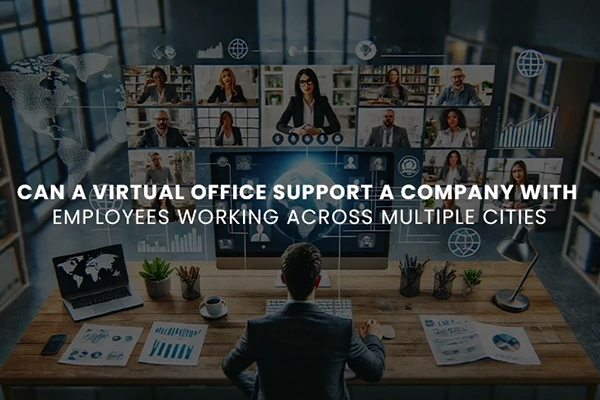
Virtual offices complement remote work by providing professional business addresses and administrative services, enabling employees across different cities to collaborate digitally while maintaining consistent communication and organizational efficiency.
4. Simplifies Business Expansion
Companies can explore new markets using virtual offices before committing to permanent premises, helping them evaluate regional opportunities, control financial risks, and expand operations with greater flexibility.
Key Benefits of Virtual Office Solutions
Businesses managing employees across multiple locations can experience several advantages:
Lower operating expenses: Reduce spending on multiple office leases, utilities, and maintenance.
Greater geographic flexibility: Explore new markets without relocating employees.
Professional credibility: Maintain a suitable business address for client communications and business activities.
Easy scalability: Add locations as requirements grow, subject to provider availability.
Administrative convenience: Access mail handling and call management where included.
Better resource allocation: Invest more in business development, employee training, and technology.
Meeting facilities: Use available meeting rooms for client discussions and occasional team gatherings.
These benefits make virtual offices an attractive option for organizations seeking flexibility without unnecessary real estate commitments.
Is a Virtual Office Suitable for Every Business?
Virtual offices suit many remote businesses, but organizations requiring warehouses, manufacturing facilities, specialized equipment, or frequent in-person services may still need dedicated physical premises to support operations.
How to Choose the Right Virtual Office
Selecting a suitable provider ensures that virtual office services align with business objectives. Companies should assess the following factors:
- Location availability: Choose cities relevant to employees, customers, and expansion plans.
- Address suitability: Verify permitted business uses and registration requirements.
- Service inclusions: Review mail handling, call management, and meeting room access.
- Transparent pricing: Check setup fees, recurring charges, deposits, and additional costs.
- Provider reliability: Examine customer reviews, support quality, and contractual terms.
- Compliance documentation: Confirm that required permissions and supporting documents are available.
Comparing these factors helps businesses avoid unexpected expenses and select services that support long-term operational needs.
Conclusion
A virtual office for multiple cities can help companies support distributed employees, reduce infrastructure expenses, and establish a professional presence across different markets. By combining suitable business addresses with digital collaboration tools and administrative services, organizations can maintain flexibility while pursuing growth.
The right solution depends on employee requirements, customer expectations, provider capabilities, and regulatory obligations. With careful planning, virtual office solutions can help businesses expand efficiently without maintaining traditional offices in every city.